When a pipe bursts in your home, the first instinct is to call a plumber. That makes sense – you need the source stopped. But here is the part most homeowners miss: by the time the plumber leaves, the real damage has already begun. Water does not wait. It moves through walls, soaks into subfloors, saturates insulation, and begins breaking down drywall within hours. Fixing the pipe is step one. What comes after is a whole separate battle.
This guide walks you through exactly what happens to your home after a pipe burst – and why acting fast on both the plumbing and the water damage side is the only way to protect your property.
How a Burst Pipe Damages Your Home Beyond the Obvious
Most people see the puddle and think that is the extent of it. It rarely is.
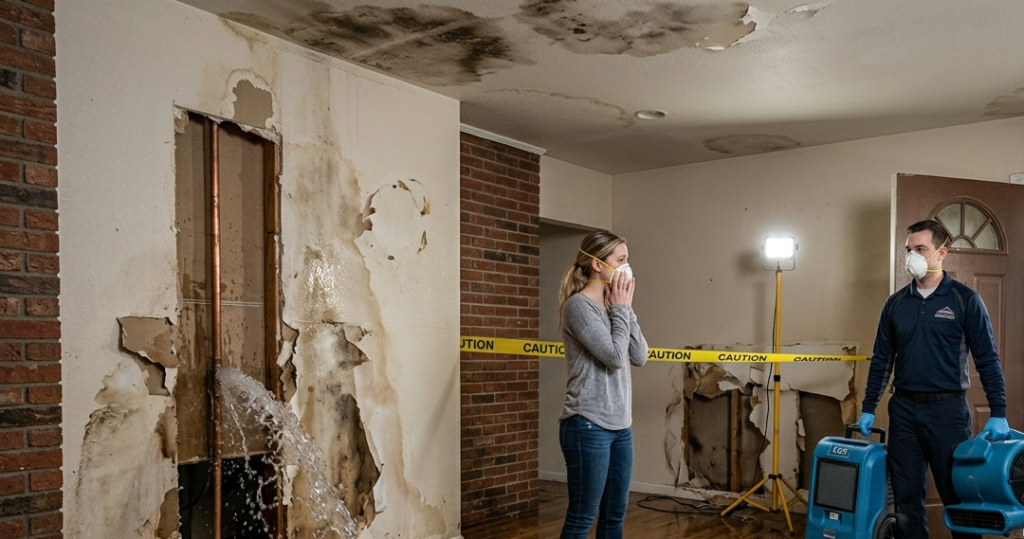
Water follows the path of least resistance. From a burst pipe inside a wall, it will spread horizontally through wall cavities, travel down to the subfloor, wick upward into drywall, and pool under flooring materials like hardwood, tile, and carpet. In a matter of hours, what started as a single pipe failure can saturate an entire section of your home.
Here is what is at risk after a pipe burst:
Drywall absorbs water quickly and begins to soften, warp, and eventually crumble. Once wet drywall sits for more than 24 to 48 hours, it typically cannot be dried in place and must be cut out and replaced.
Subfloors made of plywood or OSB swell, delaminate, and lose structural integrity when soaked. Hardwood floors cup and buckle. Tile grout lines allow water to seep into the adhesive layer beneath.
Insulation inside walls holds moisture like a sponge. Wet insulation does not dry on its own – it compresses, loses its R-value, and becomes a breeding ground for mold.
Structural framing can be affected in severe cases, particularly if water sits for extended periods. Wood rot sets in when moisture content stays elevated for days or weeks.
The damage you can see is almost always less than the damage you cannot.
The 24 to 48 Hour Window That Changes Everything
This is the most important thing to understand after a pipe burst: mold can begin growing within 24 to 48 hours of water exposure under the right conditions – and most homes provide exactly those conditions.
According to the U.S. Environmental Protection Agency, mold growth in a water-damaged building can begin in as little as 24 to 48 hours, and once established, it spreads rapidly to unaffected areas. You can read more about indoor mold and moisture guidance directly from the EPA at epa.gov/mold.
This means the window between “pipe just burst” and “mold is now growing inside your walls” is dangerously short. Getting the pipe repaired is urgent. Getting professional water extraction and structural drying started within that same window is equally urgent – not something to schedule for next week.
What a Water Damage Restoration Company Actually Does
A plumber fixes the source of the water. A water damage restoration company handles everything the water touched.
The restoration process typically follows this sequence:
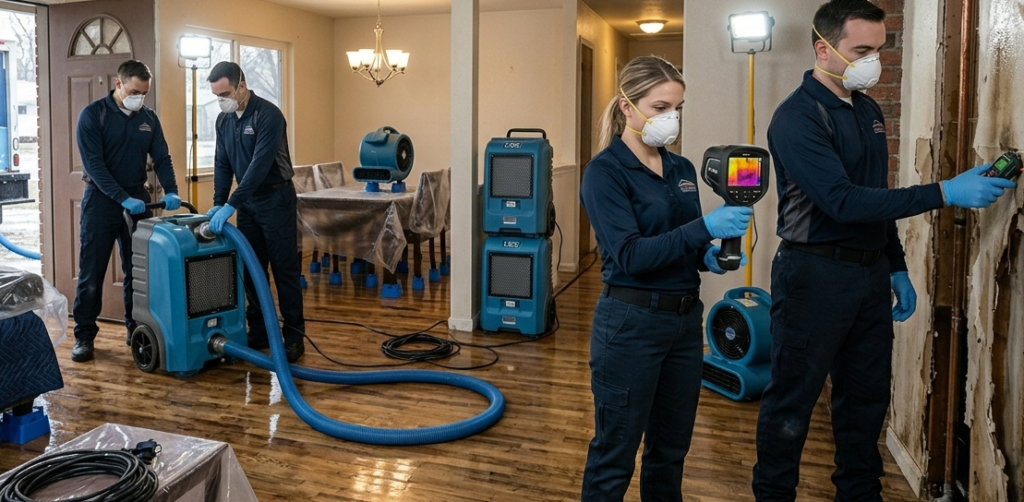
Emergency water extraction uses industrial-grade truck-mounted or portable extraction units to pull standing water out of floors, carpets, and affected areas within the first hour of arrival.
Moisture mapping uses thermal imaging cameras and moisture meters to find exactly where water has traveled – including inside walls and under flooring that looks dry on the surface.
Structural drying involves placing high-velocity air movers and commercial dehumidifiers throughout the affected space. This is not the same as opening windows and running a box fan. Proper drying requires precise equipment placement and daily moisture readings to confirm progress.
Content protection and removal covers moving or storing furniture, belongings, and salvageable materials out of the drying zone to prevent secondary damage.
Antimicrobial treatment is applied to affected surfaces to inhibit mold growth during the drying period.
Final inspection confirms that all materials have reached acceptable moisture levels before any reconstruction begins.
If you are dealing with pipe-related water damage and need this full process handled by certified technicians, the team at Little Rock AR Water Damage provides 24/7 emergency response and handles everything from extraction through full structural drying and restoration.
Pipe Repair and Water Restoration: Two Calls, Not One
A common and costly mistake is assuming the plumber will handle the water damage side, or that once the leak is stopped the problem is solved. These are two separate scopes of work handled by two different types of professionals.
Your plumber’s job ends when the pipe is sealed. At that point, the restoration clock has already been running. The sooner a certified water damage restoration team arrives to begin extraction and drying, the less material you lose, the lower your total repair bill, and the lower your risk of a mold problem developing inside your walls weeks after the incident.
When scheduling your plumbing repair, make the second call at the same time – not after.
Call (509) 508-5574 for same-day service you can trust.
Leave a Reply